Sitting inside the world’s first recognized Tropical Urban Park (TUP)
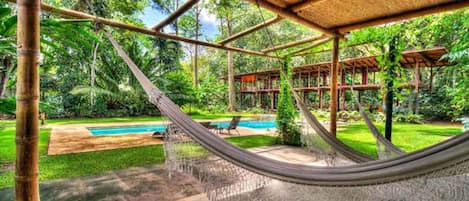
Chosa Manglar Suites and Cabins sit inside the world’s first recognized Tropical Urban Park (TUP), a living natural area woven directly into the fabric of Puerto Jiménez. This is a place where the forest, mangrove, and town meet without boundaries, and where daily life unfolds in the presence of wildlife, shade, and the quiet movement of the tropics. The property is shaped by mature trees, open gardens, and soft pathways that connect each dwelling to the larger rhythm of the park. Guests stay within an environment that feels both sheltered and open, close to nature yet steps from the center of town.
The Tropical Urban Park is defined by its ability to hold biodiversity and community in the same space. At Chosa Manglar, this becomes visible in the way mornings begin with birdsong, how afternoons settle into stillness beneath the canopy, and how evenings carry the subtle sounds of the forest returning to activity. Wildlife moves freely through the property—sometimes seen, sometimes only sensed—reminding guests that they are sharing a living landscape rather than observing it from a distance. The experience is not curated or staged; it is simply the natural rhythm of the tropics continuing around you.
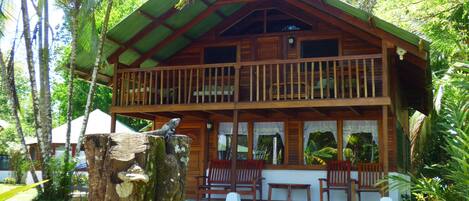
The suites and cabins are designed to support this kind of stay. They are simple, comfortable, and intentionally unobtrusive, allowing the surrounding environment to remain the central presence. Each dwelling offers a quiet place to rest, read, reflect, or prepare for the day’s explorations. The architecture is modest and grounded, shaped by airflow, shade, and the practical needs of tropical living. Nothing is excessive, and nothing competes with the landscape. Instead, the dwellings act as small anchors within the park, giving guests a sense of place without separating them from the environment.
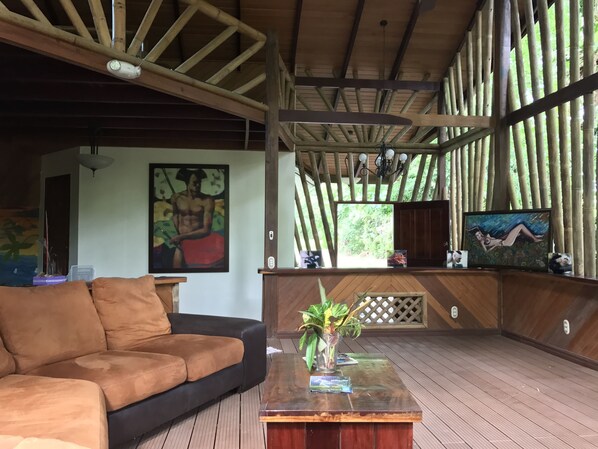
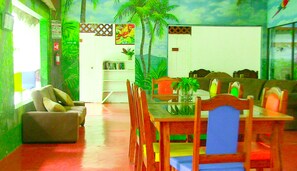
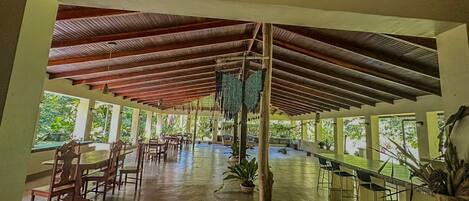
Paths throughout the property lead to shared spaces where guests can pause, gather, or simply observe the movement of the day. Some areas open to the sky; others are held beneath dense canopy. There are corners for solitude and corners for conversation, all connected by the same gentle spatial logic that defines the Tropical Urban Park. The layout encourages unhurried movement—slow walks to breakfast, quiet returns in the afternoon, and soft transitions into evening. It is a place where time stretches, not because there is nothing to do, but because the environment invites a different pace. Being inside the world’s first recognized Tropical Urban Park also means being part of a larger ecological and cultural story.
Puerto Jiménez is a small town with a strong connection to the land and sea, and Chosa Manglar reflects that relationship. Guests can step out of the property and immediately access local cafés, small shops, and the daily rhythms of the community. At the same time, the park provides a buffer of calm, allowing guests to return to a quieter space after exploring the town or the surrounding landscapes of the Osa Peninsula. This balance—between immersion and access, between nature and community—is what defines the TUP identity.
The experience at Chosa Manglar is not about luxury in the conventional sense. It is about presence, atmosphere, and the feeling of being held within a living environment. It is about waking up to filtered light through leaves, noticing the patterns of wildlife, and experiencing the tropics not as a backdrop but as a companion. It is about the simplicity of a well‑designed space that supports rest and reflection without distraction. It is about being close to the essentials: shade, breeze, movement, and the quiet continuity of the natural world.
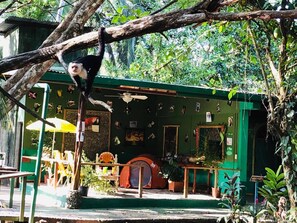
Guests often describe their stay not in terms of amenities, but in terms of moments: a morning spent listening to birds, an unexpected encounter with a coati or a troop of monkeys, a peaceful afternoon reading in a shaded corner, or a walk through town that ends with a return to the calm of the park. These moments accumulate into a kind of gentle immersion—one that does not demand effort or expertise, only attention.
Chosa Manglar Suites and Cabins are part of a broader vision for the Tropical Urban Park: a place where ecological authenticity and community life coexist, where visitors can experience the tropics in a grounded and respectful way, and where the environment is not a spectacle but a shared space. The property serves as an introduction to this vision, offering guests a stay that is both accessible and meaningful, simple and memorable.
Whether guests come for a short visit or a longer stay, the experience is shaped by the same elements: the presence of wildlife, the comfort of shade, the ease of movement, and the quiet sense of being inside a living landscape. Chosa Manglar is not a retreat from the world; it is a place where the world feels more connected, more immediate, and more alive.
In this way, the suites and cabins become more than accommodations. They become part of the Tropical Urban Park itself—small, thoughtful spaces that support the larger identity of the park and invite guests to experience the tropics with clarity, calm, and curiosity. - Sitting inside the world’s first recognized Tropical Urban Park (TUP)
Chosa Manglar Suites and Cabins sit inside the world’s first recognized Tropical Urban Park (TUP), a living natural area woven directly into the fabric of Puerto Jiménez. This is a place where the forest, mangrove, and town meet without boundaries, and where daily life unfolds in the presence of wildlife, shade, and the quiet movement of the tropics. The property is shaped by mature trees, open gardens, and soft pathways that connect each dwelling to the larger rhythm of the park. Guests stay within an environment that feels both sheltered and open, close to nature yet steps from the center of town.
The Tropical Urban Park is defined by its ability to hold biodiversity and community in the same space. At Chosa Manglar, this becomes visible in the way mornings begin with birdsong, how afternoons settle into stillness beneath the canopy, and how evenings carry the subtle sounds of the forest returning to activity. Wildlife moves freely through the property—sometimes seen, sometimes only sensed—reminding guests that they are sharing a living landscape rather than observing it from a distance. The experience is not curated or staged; it is simply the natural rhythm of the tropics continuing around you.
The suites and cabins are designed to support this kind of stay. They are simple, comfortable, and intentionally unobtrusive, allowing the surrounding environment to remain the central presence. Each dwelling offers a quiet place to rest, read, reflect, or prepare for the day’s explorations. The architecture is modest and grounded, shaped by airflow, shade, and the practical needs of tropical living. Nothing is excessive, and nothing competes with the landscape. Instead, the dwellings act as small anchors within the park, giving guests a sense of place without separating them from the environment.
Paths throughout the property lead to shared spaces where guests can pause, gather, or simply observe the movement of the day. Some areas open to the sky; others are held beneath dense canopy. There are corners for solitude and corners for conversation, all connected by the same gentle spatial logic that defines the Tropical Urban Park. The layout encourages unhurried movement—slow walks to breakfast, quiet returns in the afternoon, and soft transitions into evening. It is a place where time stretches, not because there is nothing to do, but because the environment invites a different pace. Being inside the world’s first recognized Tropical Urban Park also means being part of a larger ecological and cultural story.
Puerto Jiménez is a small town with a strong connection to the land and sea, and Chosa Manglar reflects that relationship. Guests can step out of the property and immediately access local cafés, small shops, and the daily rhythms of the community. At the same time, the park provides a buffer of calm, allowing guests to return to a quieter space after exploring the town or the surrounding landscapes of the Osa Peninsula. This balance—between immersion and access, between nature and community—is what defines the TUP identity.
The experience at Chosa Manglar is not about luxury in the conventional sense. It is about presence, atmosphere, and the feeling of being held within a living environment. It is about waking up to filtered light through leaves, noticing the patterns of wildlife, and experiencing the tropics not as a backdrop but as a companion. It is about the simplicity of a well‑designed space that supports rest and reflection without distraction. It is about being close to the essentials: shade, breeze, movement, and the quiet continuity of the natural world.
Guests often describe their stay not in terms of amenities, but in terms of moments: a morning spent listening to birds, an unexpected encounter with a coati or a troop of monkeys, a peaceful afternoon reading in a shaded corner, or a walk through town that ends with a return to the calm of the park. These moments accumulate into a kind of gentle immersion—one that does not demand effort or expertise, only attention.
Chosa Manglar Suites and Cabins are part of a broader vision for the Tropical Urban Park: a place where ecological authenticity and community life coexist, where visitors can experience the tropics in a grounded and respectful way, and where the environment is not a spectacle but a shared space. The property serves as an introduction to this vision, offering guests a stay that is both accessible and meaningful, simple and memorable.
Whether guests come for a short visit or a longer stay, the experience is shaped by the same elements: the presence of wildlife, the comfort of shade, the ease of movement, and the quiet sense of being inside a living landscape. Chosa Manglar is not a retreat from the world; it is a place where the world feels more connected, more immediate, and more alive.
In this way, the suites and cabins become more than accommodations. They become part of the Tropical Urban Park itself—small, thoughtful spaces that support the larger identity of the park and invite guests to experience the tropics with clarity, calm, and curiosity.